 Click to zoom
Quick summary: Why this update matters now
The end of the year always feels like a sprint — product pushes, PR cycles, and a few leaks. This December is no different. In this briefing I walk through seven fast-moving threads that actually matter: GPT-5.2 release rumors and prediction-market signals, Mistral’s Devstrol 2 open-source coding models and the new Mistral Vibe CLI, Sam Altman’s late-night moment that pushed AI into living rooms, the Agentic AI Foundation donation from Anthropic and OpenAI, OpenAI’s new certification, and the infrastructure side — from modular turbines to blue-sky space data centers. I’ll call out what seems real, what feels like noise, and what you should do if you run AI products or policy.
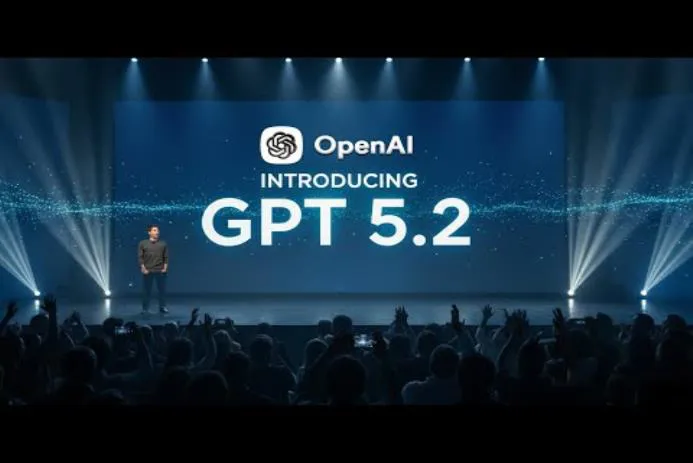
1) Is GPT-5.2 imminent — and are insiders trading on prediction markets?
Short answer: maybe — and maybe not in the way we’d like. There’s growing chatter that OpenAI might drop GPT-5.2 in December 2025. The thing most people point to are prediction markets: odds flip-flopping wildly on platforms like PolyMarket. One hour you see a ~90% chance for a date, the next it’s single digits. Those swings often smell like privileged information moving faster than public comms.
What I actually watched:
- Late Dec 7 / early Dec 8: markets priced ~90% for a Dec 9 release, then collapsed to near-zero.
- Later, a separate market spiked to ~87% for Dec 11 — only to pull back again.
Why that matters: if insiders are using prediction markets the way traders use earnings leaks, we’ve got the same regulatory and ethical problems — plus it makes market odds a murky signal. My practical read: treat prediction markets as one input, not gospel. They can surface real info quickly, but they can also be noisy or manipulated.
GPT-5.1 release 2025 showed how minor versioning can shift integration plans, so be cautious about treating market odds as commitments.
Practical takeaway
- For developers: Don’t restructure product roadmaps around an odds chart. Plan for model changes, build decoupled integration points, and practice safe feature toggles.
- For managers & regulators: Watch these markets. They can reveal leaks — and that suggests a need for guidance or monitoring similar to what we have for financial markets.
2) Mistral releases Devstrol 2 — open-source coding models and Mistral Vibe
Here’s a crisp one: Mistral announced Devstrol 2, a coding-focused family, plus Mistral Vibe — a CLI for stitching automation and reproducible developer workflows. The headline tech details matter because they let teams choose where to run models and how to automate them.
- Devstrol 2 — 123B parameters, open-weight, released under an MIT license.
- Devstrol Small — 24B parameters, open-weight, released under Apache 2.0.
- Both models are available via Mistral’s API and as downloadable weights for on-prem use.
Curious choice: two licenses for the same family. MIT = extremely permissive; Apache 2.0 adds patent protections. That combo feels deliberate: broadly enable adoption (MIT) while keeping a legal safety lane for some builds (Apache).
Benchmarks and how to interpret them
Mistral published Swebench-verified charts showing Devstrol 2 in strong position among open-weight models. Important caveat: open-weight comparisons don’t always translate to parity with closed models like Gemini or Claude on every real-world task.
For example, one open-only chart showed Sonnet 4.5 beating Devstrol 2 on a measured win rate (Sonnet ~53% vs Devstrol 2 ~21%). That sounds bleak — but benchmarks depend heavily on prompt sets, evaluation methodology, and task framing. In short: numbers are useful, but context is everything.
Why this matters
- Open-weight models at this level mean faster iteration for teams that want on-premise or self-hosted stacks.
- Mistral Vibe CLI simplifies reproducible automation — think of it as an agent-CLI cousin to Claude Code or other agentic tooling.
Practical example: a startup with strict data governance can run Devstrol Small locally (24B) to avoid cloud egress, test code generation in CI, and iterate without exposing source code to an external API. That’s real value for teams juggling IP and compliance.
Anthropic code execution with MCP 2025 patterns can pair with on-prem models for token-efficient agents.
3) AI goes mainstream — Sam Altman on late night TV
Sam Altman’s appearance on The Tonight Show wasn’t just a PR play — it’s a milestone in mainstream awareness. Questions like "What is ChatGPT?" and "Is AI good?" during a late-night segment highlight how basic the public’s understanding still is. That’s both an opportunity and a headache.
- Mass-market awareness accelerates demand for easy, trustable educational material — and certification programs.
- It also amplifies misconceptions: people often conflate chat demos with production-grade reliability.
4) Anthropic + OpenAI: launching the Agentic AI Foundation
This is a practical governance move. Anthropic and OpenAI donated key tools to a nonprofit foundation managed by the Linux Foundation: the Model Context Protocol (MCP) and agents.md. Both are already seeing adoption across the ecosystem.
- Model Context Protocol (MCP) — standardizes how agents call tools and access context. There are over 10,000 active public MCP servers and integrations across ChatGPT, Cursor, Gemini, Microsoft Copilot, and VS Code.
- agents.md — OpenAI’s lightweight format for agent instructions and project-specific context files. It’s fast becoming the de-facto way to share agent directives.
Why it’s a big deal: putting these into a foundation reduces vendor lock-in, helps build shared best practices, and makes agent tooling safer and more interoperable. In product terms: less vendor-specific glue, more composability.
Anthropic $50B data centre expansion 2025 shows the scale of compute demand that makes shared agent standards valuable.
5) OpenAI AI certification (learn ChatGPT and get certified)
OpenAI’s certification tied to a ChatGPT implementation course looks designed to push workforce adoption. The badge could become a baseline for entry-level roles that rely on prompt engineering or AI-enabled processes. I’ve seen teams hire specifically for prompt skills — a formal certification makes that hiring signal cleaner.
6) Power, data centers, and modular turbines for AI
On the infrastructure side, Boom Power’s announcement of a 42 MW turbine aimed at AI data centers (branded as a high-capacity generator optimized for colocated compute) signals the growing focus on modular electricity capacity. The logic is simple: AI compute is thirsty, and grid upgrades are slow.
- Think of arrays of midsize turbines as the blade servers of power — modular, scalable, and deployable close to compute.
- Reported orders and backlogs show immediate demand: anecdotal examples point to GW-scale orders and significant backlogs.
Why energy planning matters: China’s big expansion in generation capacity around 2000 gave it structural advantage. The U.S. needs faster generation additions and flexible, on-site solutions (gas turbines, microgrids, or hydrogen/nuclear mixes) to keep up with high-density AI clusters.
AI-directed hacking 2025 incidents highlight why colocated compute resilience and secure power matters.
7) The wild idea: data centers in space
This one is less near-term product strategy and more long-range research: leaders like Gavin Baker, Jensen Huang, and Sundar Pichai have floated orbiting data centers. There are plausible upsides — continuous solar exposure, strong radiative cooling on the dark side of orbit, and potential low-latency laser links between satellites — but the barriers are huge.
- Advantages: more consistent solar irradiance, potential radiative cooling benefits, and optical inter-satellite links that could be exceptionally coherent.
- Challenges: launch costs, radiation-hardened hardware, long-term heat rejection systems (radiators), and tricky latency to ground users.
Google Research’s Project Starcatcher sketches some of these networked satellite ideas. Thermodynamics in space are unforgiving — you need radiators and radiation mitigation. Does it become practical? Maybe decades out. But it’s the kind of idea that forces us to rethink the energy-thermal-network stack.
Reality check
There’s plenty of hype. Space-based compute makes for headlines, but the engineering and economics are punishing. Still, it’s worth funding research — some thermal and optical tricks could eventually change the calculus.
Final thoughts and practical recommendations
Where things land for teams and leaders:
- Open-weight models like Devstrol 2 are real competition — expect faster iteration from Mistral and other OSS groups.
- Prediction markets can surface signals, but insider activity and manipulation risk mean treat them cautiously.
- Energy & cooling are strategic levers now — expect more investment in modular turbines, on-site generation, and research into alternatives.
- Standards (MCP, agents.md) matter — they reduce lock-in and improve safety for agentic systems.
From building dozens of AI features into products: winners pair model access with ops muscle — think CI/CD for models, clear governance, reproducible prompts or agents.md files, and energy-aware deployment planning. In plain terms: model + operations + infrastructure = how you scale into 2026. Miss one of those and you’ll be firefighting rather than building.
Resources and further reading
- PolyMarket — track prediction markets (useful if you want to observe market signals around a possible GPT-5.2 drop).
- Mistral AI announcements and Swebench — for open-weight model details and benchmarks.
- Linux Foundation — governance details for the Agentic AI Foundation and other open foundations.
- Google Research Project Starcatcher — satellite networking and space-based compute concepts.
Thanks for reading!
If you found this article helpful, share it with others