 Click to zoom
What’s happening in Edmonton?
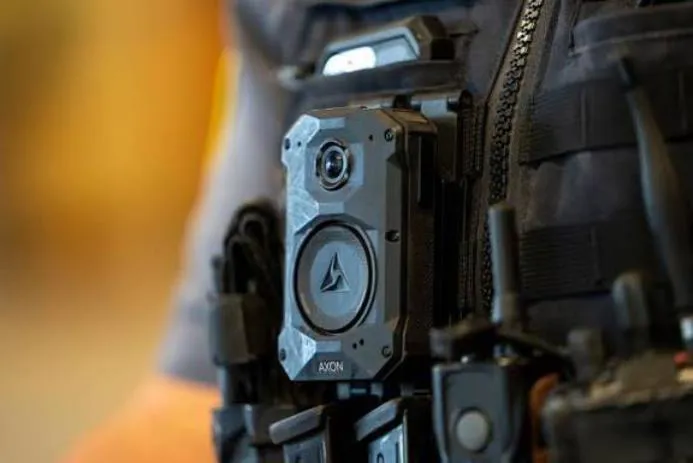
Edmonton police have quietly started a limited pilot that pairs police body cameras with AI to look for faces on a municipal “high‑risk” watch list. Combine a 6,341‑person flag list with a 724‑person warrants list and you get roughly 7,000 names — people flagged as violent, armed, or otherwise high risk. The trial, run with a large U.S. vendor that supplies cameras across North America, is testing whether real‑time face recognition police cameras can be fitted into everyday policing without falling apart in the field.
Why the pilot matters
There are a few reasons this isn’t just another tech pilot:
- Scale and vendor reach: This vendor’s hardware is everywhere — meaning any successful rollout could ripple across other police services.
- Ethical history: The company paused certain facial‑recognition research after concerns from an internal AI ethics board. That history still hangs over this work and shapes public scepticism.
- Real‑world testing: This isn’t a lab demo. It’s daylight, moving officers, real streets — exactly the conditions that expose weaknesses in watch list matching algorithms.
How the pilot is structured
The publicly described design is deliberately narrow, apparently to limit variables while collecting useful operational data:
- Testing only during daylight hours and running through December — they say this avoids the biggest lighting and weather problems.
- About 50 officers wear the pilot cameras. Importantly, matches won’t be pushed live to officers in the field; the vendor and police say those hits will be reviewed later at the station.
- Recognition is restricted to situations where officers have already begun a legitimate investigation or are responding to a call — not passive crowd scanning — with an “active” mode available for higher‑resolution captures during responses.
- All algorithmic matches are subject to later human review, per the vendor’s statement.
What supporters say
Supporters frame the pilot as a safety tool. In their telling, AI‑enabled body cameras could quickly alert officers to potentially armed or dangerous suspects nearby and improve situational awareness on calls. The vendor pitches the work as early‑stage field research designed to generate independent insights, strengthen oversight, and harden safeguards before any wider deployment.
What critics and experts warn about
But there’s a long list of warnings from scholars, civil‑liberties groups, and former ethics advisors:
- Accuracy and bias: Peer‑reviewed studies and audits show face recognition tends to be less accurate for women, younger people, and darker‑skinned individuals — and performance drops further on low‑resolution, moving bodycam video compared with a still ID photo.
- Transparency and oversight: Critics say pilots should come with public consultation, a privacy impact assessment, and independent algorithmic audits. Several former advisors say they expected published evaluations before any field test — and haven’t seen them.
- Scope creep: Little pilots can grow. Tech introduced as limited operational testing can, over time, become routine surveillance without proper democratic review.
Policy landscape: Who’s restricting or permitting facial recognition?
Regulatory approaches differ worldwide — and that patchwork matters for how police tech develops:
- The European Union is moving to ban real‑time public face scanning by police except for very narrow, serious‑crime uses.
- Several U.S. cities and states limit or ban police facial recognition, while federal rules remain inconsistent and politically contested.
- The United Kingdom has used street‑level camera systems for years; arrests have been reported, but the deployments remain controversial and legally fraught.
Missing details and open questions
Public statements leave several operational and governance questions unanswered:
- Which third‑party facial recognition model or supplier is actually powering the watch list matching algorithm? The camera maker says it relies on a third‑party model but hasn’t named the supplier.
- Exactly what criteria qualify someone for the watch list? Who reviews it and how often is it refreshed?
- What training will human reviewers receive to cut false positives and reduce algorithmic bias?
- How will data retention, privacy protections, and redress for misidentifications be handled if a false ID causes harm?
Practical considerations in Edmonton’s climate
Edmonton’s winters and low winter sun change everything. Cold temperatures, scarves, hats, low angles of light and snow can reduce face visibility — and that’s exactly why the city’s conditions are useful for operational testing in real‑world policing. In short: vendors need to show how their models behave outside a sanitized lab.
Voices from the community
Local academics and community leaders are watching closely. One criminologist called Edmonton a “laboratory” for the tool and reminded officials that the city’s strained relationships with Indigenous and Black residents make extra scrutiny essential. Trust doesn’t arrive by press release; it’s earned through transparency and community consultation.
An illustrative hypothetical: how a match could play out
Picture an officer responding to a disturbance. They flip to “active” recording; the system later flags a match to a name on the warrants list. Reviewers at the station compare the footage and find the subject’s face was partly obscured by a scarf — a false positive. No detention happens. The incident is logged and the performance file updated. This is the good path: human review, documentation, and vendor feedback. But imagine the same mistake without review or a clear audit trail — reputational damage, stress for the person misidentified, and potential legal fallout. Human review and redress are not optional extras — they’re essential.
What independent oversight should look like
Best practices from privacy and civil‑rights groups boil down to a few concrete demands:
- Publish a full privacy impact assessment and algorithmic evaluation reports before field tests.
- Commission independent third‑party testing for racial, age, and gender bias under the messy conditions of real policing.
- Set clear, legally enforceable limits on when and how the technology is used — and bake in oversight mechanisms that can’t be easily unpicked later.
- Create community consultation processes and clear routes for individuals to challenge a facial recognition misidentification.
Where this could lead
If Edmonton’s field research shows clear performance improvements and the vendor publishes transparent oversight mechanisms, other agencies — especially those already buying the vendor’s hardware — may follow. If trials instead reveal persistent bias, high false‑positive risk, or weak governance, they could harden calls for bans or tight restrictions. Both futures are plausible. The difference will be the quality of the testing and the willingness to publish the results.
External resources and further reading
For independent research and standards, see the ACLU on civil‑liberties risks, and NIST’s face recognition evaluations for technical performance testing. For policymaking context, the European Parliament materials on AI regulation are a useful start.
Conclusion: proceed with caution
Edmonton’s pilot is an important test case, and here’s a blunt take from someone who’s watched similar rollouts: tech trials that skip public engagement and independent evaluation usually erode trust faster than they build safety. Real‑world research matters — but only if it’s paired with rigorous independent testing, full transparency, legal limits, and real community involvement. Those are the guardrails that determine whether a pilot delivers safer policing or just adds another layer of risk. Learn more about how similar AI deployment and testing practices are documented in our guide: Google AI Studio: A Practical Guide to Building & Deploying AI.
Note: this article synthesizes public statements by city and vendor officials, commentary from privacy and ethics experts, and relevant policy examples. It is not an endorsement of any vendor.
Thanks for reading!
If you found this article helpful, share it with others